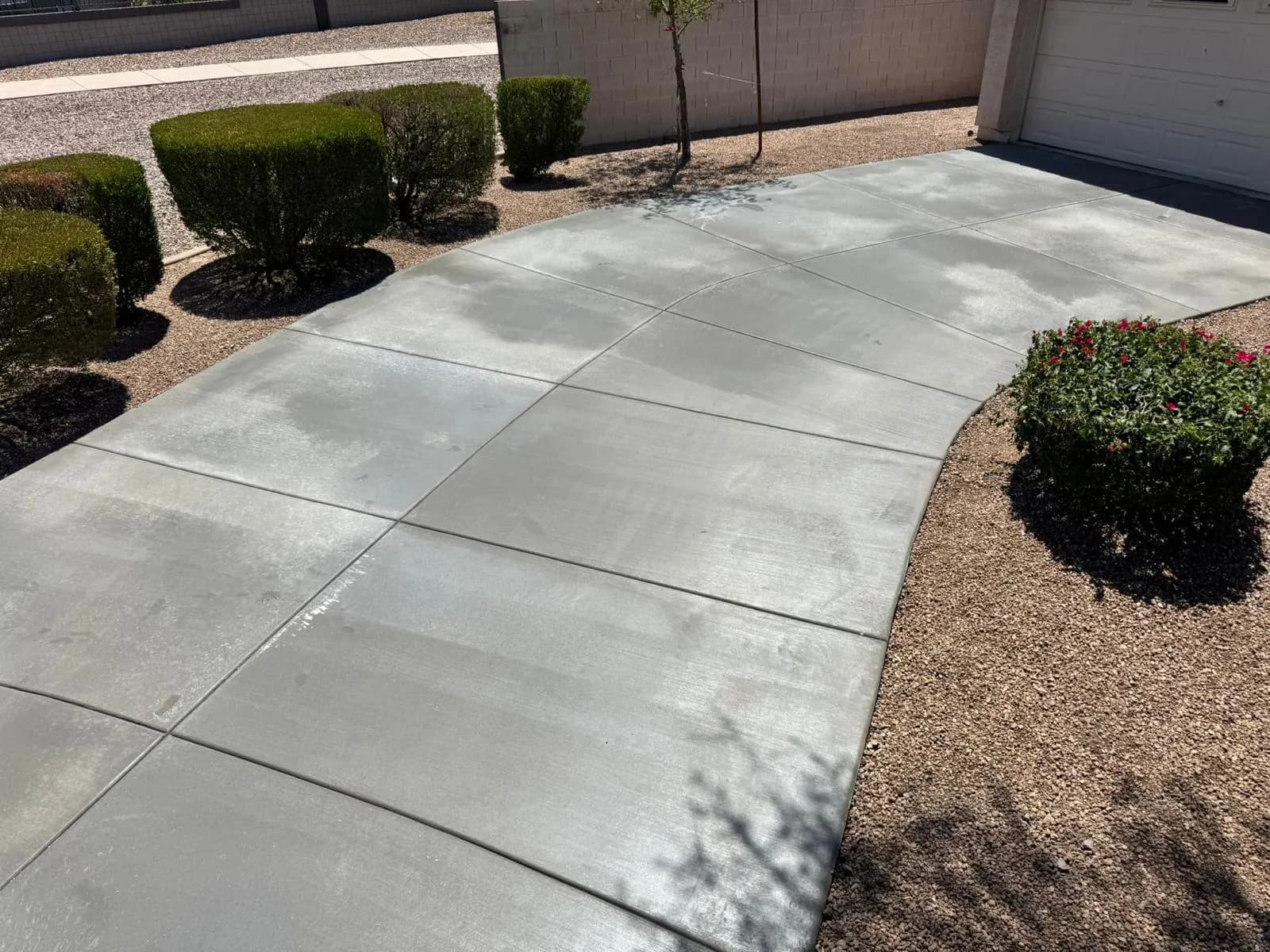
Licensed • Bonded • Insured · Arizona ROC #358800
Concrete Driveways in Phoenix and Across the Valley
- Licensed
- Bonded
- Insured
- Residential
- Commercial
- Free Estimates
A driveway is the largest single piece of concrete on most Arizona properties, and it takes more punishment than anything else: full vehicle loads every day, ground temperatures that swing hard between a summer afternoon and a winter night, and a subgrade that has to stay put underneath all of it.
SM Construction LLC pours new driveways, replaces failed ones and widens existing ones for homeowners throughout Phoenix and the surrounding communities. The work starts below the surface — with excavation, base preparation and compaction — because that is what decides how a driveway holds up years later.
What This Work Solves
Cracking that keeps getting wider
Hairline shrinkage cracks are normal in any slab. Cracks that keep opening, step up at the edges or run through a joint usually point at something underneath — a base that was never compacted, a slab poured too thin for the vehicles using it, or joints cut too late and too far apart. Replacing the surface without fixing the cause just resets the clock.
Edges breaking away
Driveway edges fail first because that is where wheels leave the slab and where the base is easiest to undermine. Getting the edge thickness, the compaction and the transition to the surrounding grade right is what keeps it intact.
Water running the wrong way
A driveway sets the drainage for the whole front of a property. Slope has to move water away from the garage and the foundation and out toward the street, and it has to keep doing that during a monsoon downpour, not just a garden hose test.
Not enough room
Plenty of Valley homes were built with a driveway sized for two smaller cars. Widening, extending toward the side yard or adding a parking pad is often less disruptive than people expect and can be done so the new concrete reads as part of the original.
Projects We Take On
This page also covers concrete extensions, sidewalks & walkways.
- New driveways for existing homes
- Full removal and replacement of a failed driveway
- Widening a driveway for a third vehicle or wider garage
- Driveway extensions toward a side yard or gate
- Approaches and aprons between the driveway and the street
- Parking pads and additional off-street parking
- Broom-finished driveways with saw-cut control joints
- Decorative and stamped driveway surfaces
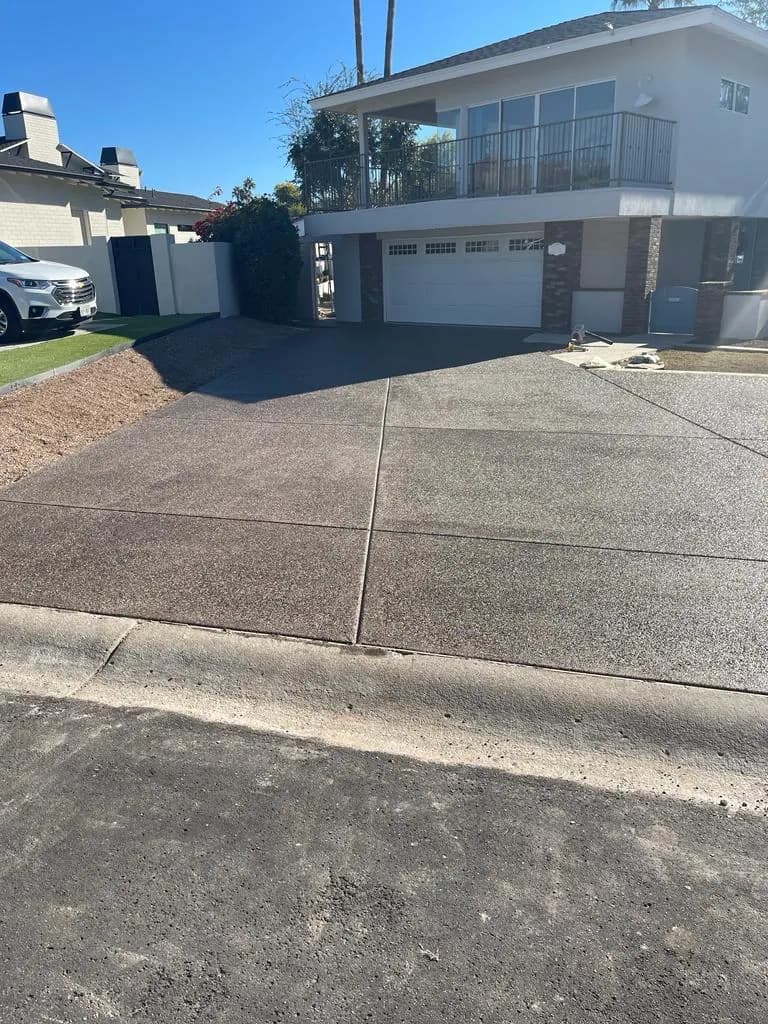
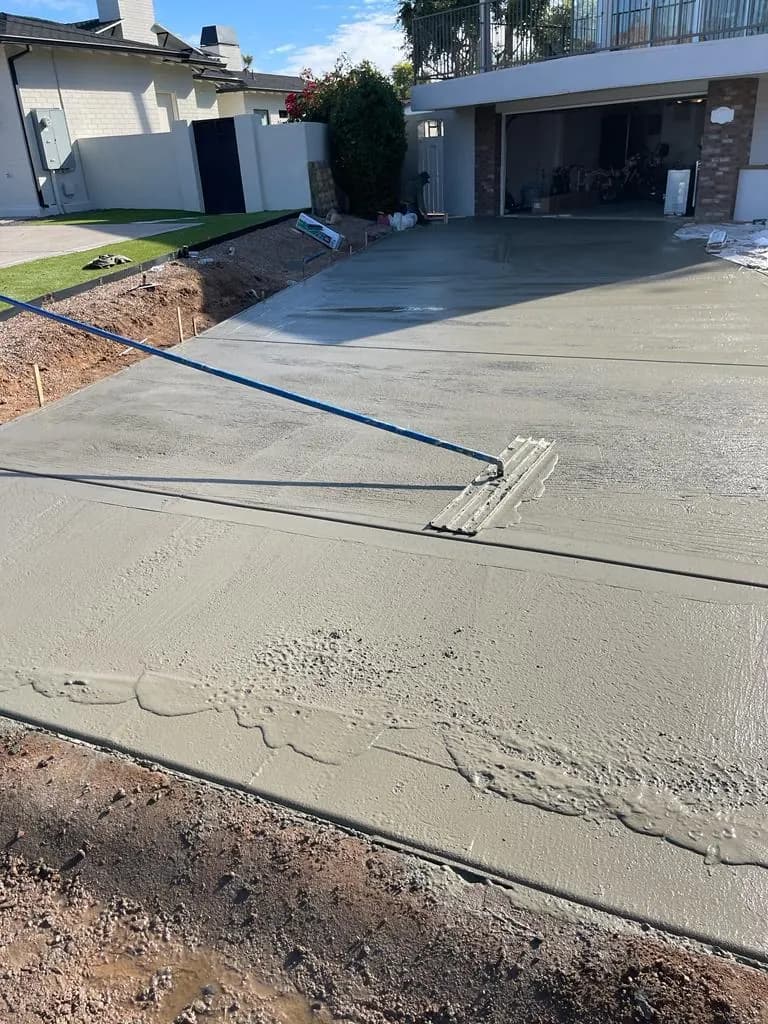
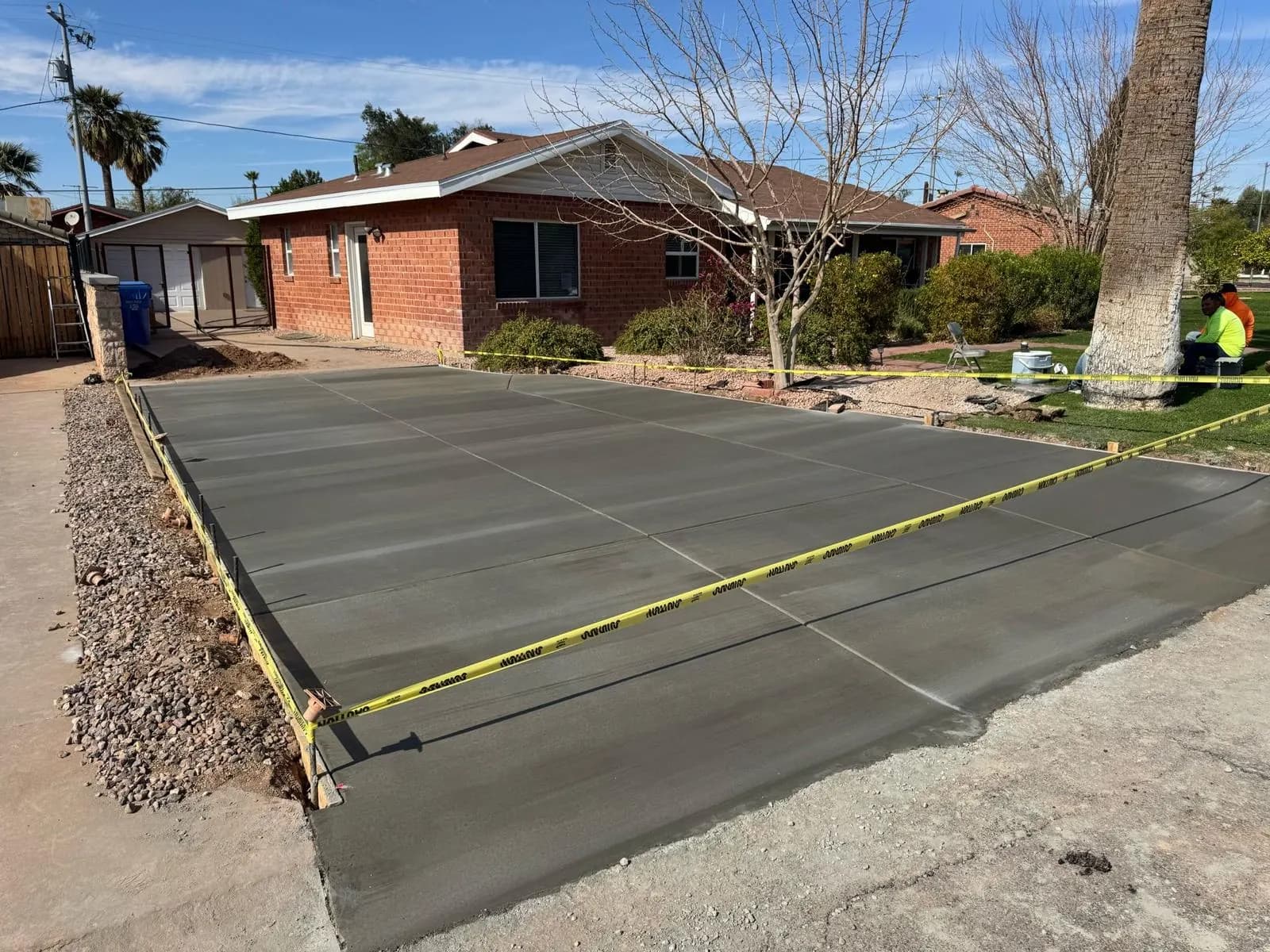
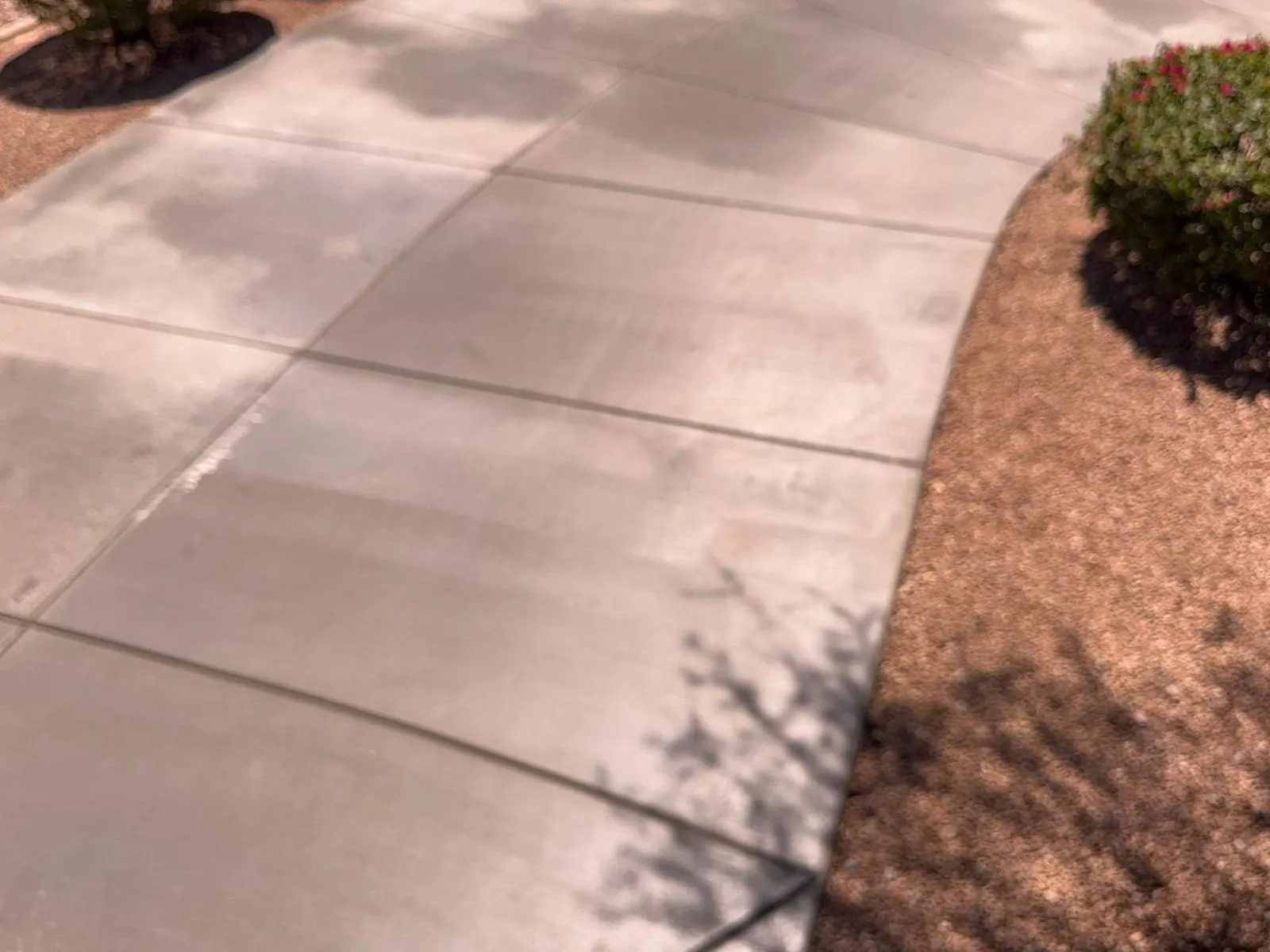
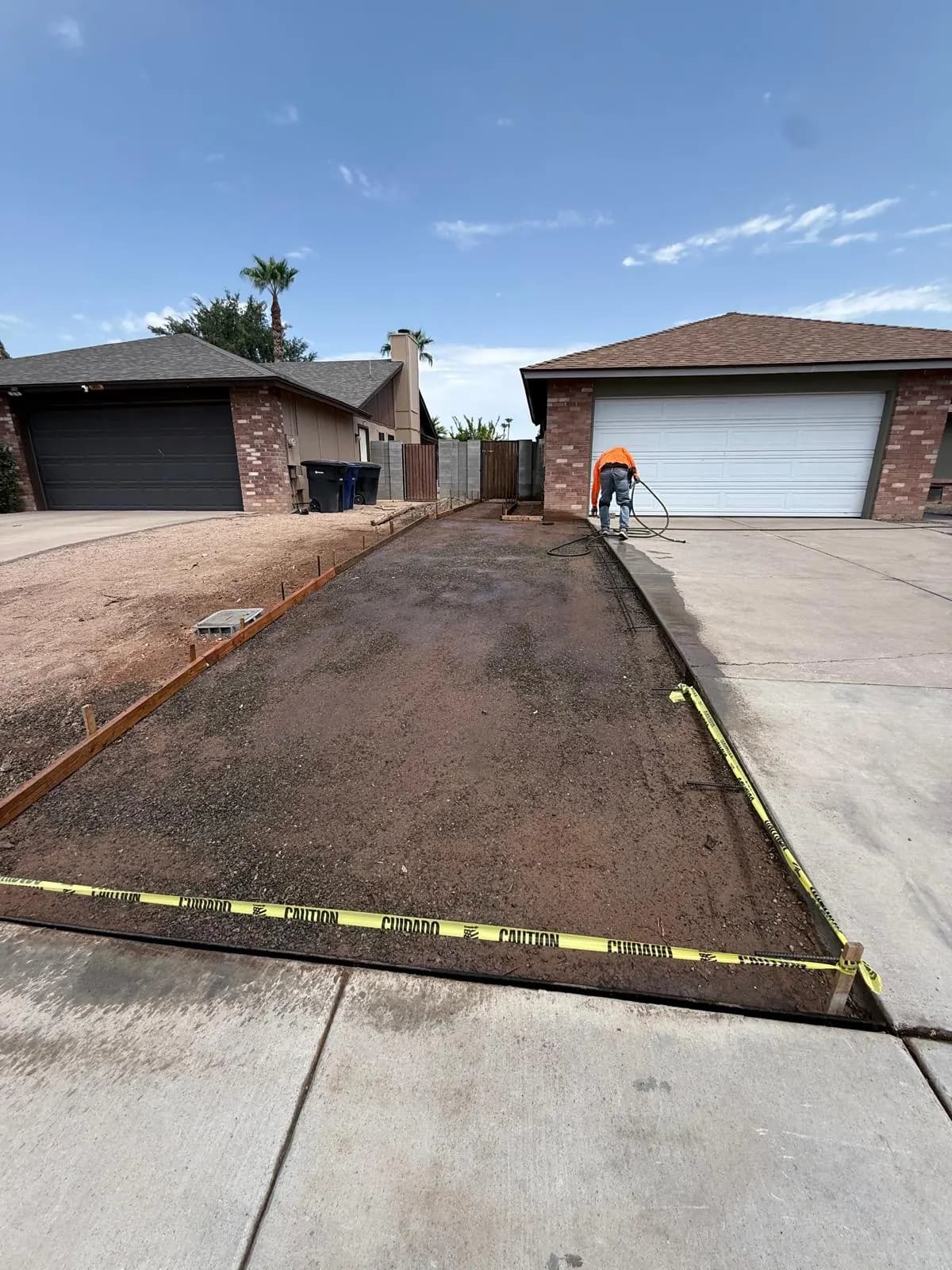
Concrete Driveways We've Built
Real photographs of our own work. See more in the full project gallery.
How We Do It
Walk the site and measure
We look at the existing surface, the grade, where water currently goes, and how vehicles actually use the space, then measure the area so the estimate reflects the real scope.
Remove and excavate
Old concrete is saw-cut and removed, and the area is excavated to the depth the new slab and its base need.
Build and compact the base
Base material is placed, graded to the drainage you need and compacted. This is the step that decides whether the driveway is still flat in a decade.
Set forms and reinforcement
Forms are set to the finished elevation and reinforcement is placed and supported so it ends up in the slab rather than lying on the base.
Place and finish
Concrete is placed, screeded, floated and given the finish agreed for the job — most often a broom finish for traction.
Joint and cure
Control joints are cut on a spacing suited to the slab, and the concrete is cured. We tell you when the driveway can take foot traffic and when it can take vehicles.
Concrete Driveways: Common Questions
How long before I can park on a new concrete driveway?
Concrete keeps gaining strength for weeks after it is placed, and how quickly it gets there depends on the mix and the weather — which in Arizona varies enormously between July and January. Rather than quote a number that may not fit your pour, we tell you on the day exactly when your driveway is ready for foot traffic and when it is ready for vehicles.
Can you widen my existing driveway instead of replacing all of it?
Often, yes. Adding a strip along one side or extending toward a gate is a common request. The new section is tied in and jointed against the existing slab. We will be straightforward with you about how closely the new concrete will match the old — color and texture differences between concrete poured years apart are normal and cannot be entirely eliminated.
Why does concrete crack, and can it be prevented?
Concrete shrinks as it cures, and that movement has to go somewhere. Control joints are cut to decide where it goes, so the slab cracks in a straight line at the bottom of a joint instead of randomly across the surface. Proper base preparation, appropriate slab thickness and correctly placed joints are what keep cracking to the fine, expected kind rather than the structural kind.
Do I need a permit for a driveway in Arizona?
It depends on the city and on what the work involves — replacing a driveway in place is treated differently from a new approach connecting to a public street. Requirements vary between the Valley municipalities. Tell us what you are planning and we will let you know what your project needs before we start.
Do you remove the old driveway?
Yes. Saw-cutting, breaking out and hauling away the old concrete is part of a replacement, and the removal and disposal are included in the estimate rather than added afterwards.
Where We Pour Concrete Driveways
Serving Phoenix and surrounding communities throughout the Valley. Concrete Driveway work is available across the metro area.
- Phoenix
- Glendale
- Peoria
- Surprise
- Buckeye
- Goodyear
- Avondale
- Scottsdale
- Mesa
- Chandler
- Gilbert
- Queen Creek
Related Concrete Services
- Concrete SlabsFlat, level, properly based slabs for sheds, shops, additions, equipment and anything else that needs a solid surface under it.
- Concrete RepairRepair, resurface or replace — with a straight answer about which one your concrete actually needs.
- Stamped & Decorative ConcreteStamped patterns, stains and textured finishes that give concrete the look of stone or tile with the durability of a slab.
- RV PadsConcrete built for the actual weight and turning radius of a coach, trailer or boat — not a driveway that happens to be long.
Planning a Concrete Project?
Tell us what you're building and request a free estimate from SM Construction LLC.
Licensed · Bonded · Insured · Arizona ROC #358800