Licensed • Bonded • Insured · Arizona ROC #358800
RV Pads and RV Garage Slabs
- Licensed
- Bonded
- Insured
- Residential
- Commercial
- Free Estimates
An RV pad is a heavy-duty slab, and treating it as a long driveway is how it ends up cracked at the wheel lines. A loaded Class A coach concentrates a great deal of weight on a small footprint, and it does it in the same place every time.
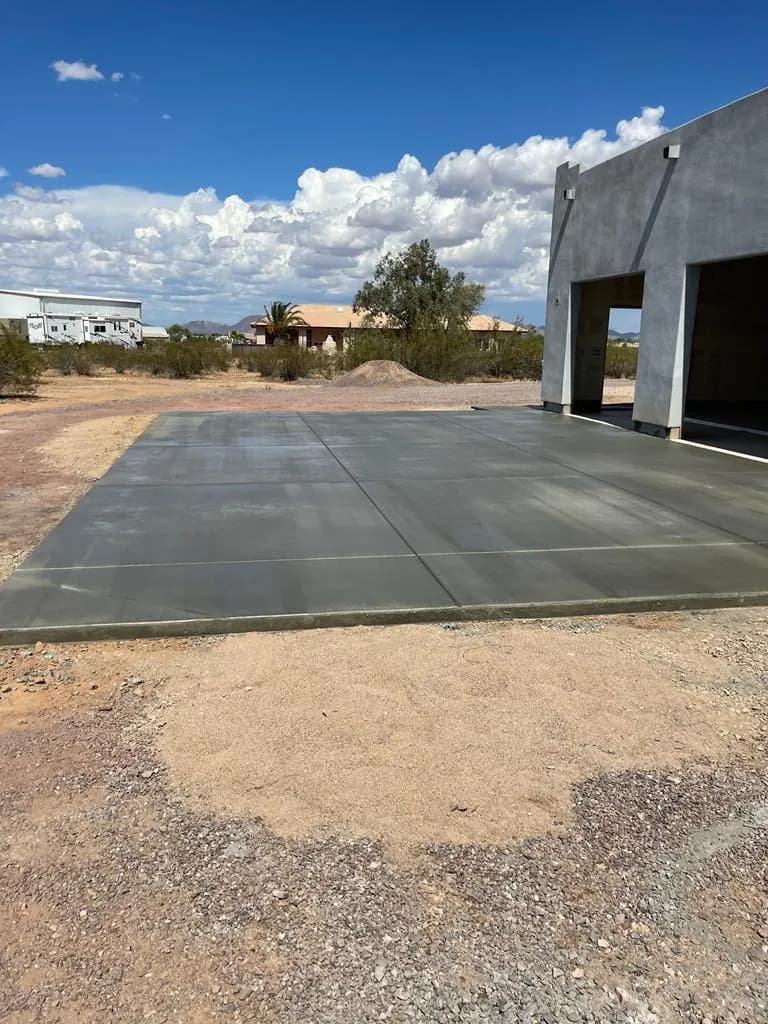
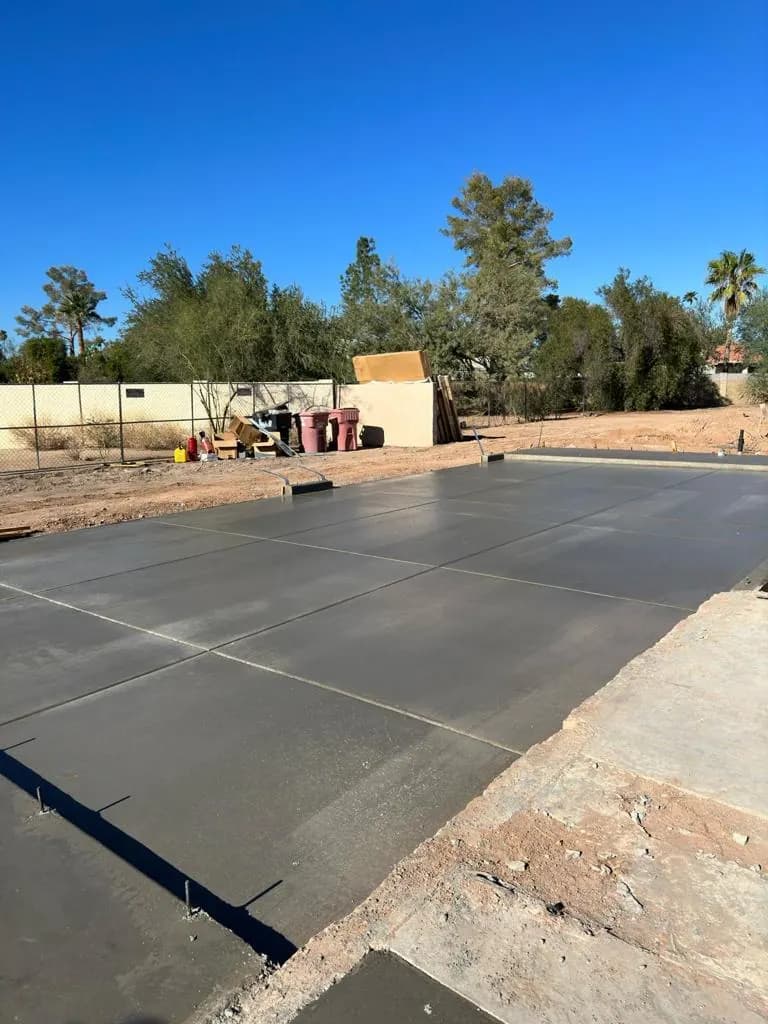
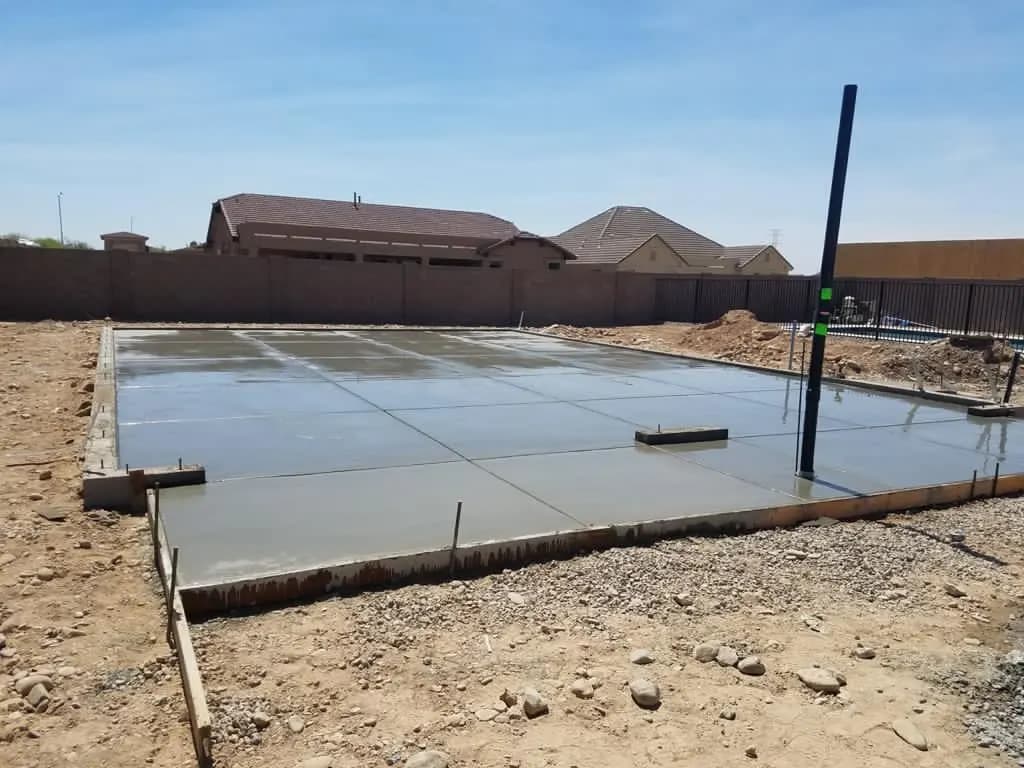
SM Construction LLC pours RV pads, parking slabs and RV garage floors for properties across Phoenix and the surrounding Valley — with the thickness, base and reinforcement chosen for the vehicle that will actually be parked on it.
What This Work Solves
Weight in the same place every time
A recreational vehicle parks on the same wheel lines every single time, and jacks and leveling pads concentrate load further still. The slab has to be specified for that concentrated, repeated load rather than for general vehicle traffic.
Getting in and out of the space
A pad you cannot comfortably back onto is a problem you live with every trip. Approach angle, turning radius, gate width and the transition from the driveway all have to be worked out on the ground before anything is formed.
Parking on dirt or rock
Gravel and decomposed granite rut under RV weight, hold moisture against tires and make leveling a chore. A concrete pad gives a stable, level, clean surface that stays that way.
Room for everything that goes with it
Most RV pads end up doing more than parking — hook-ups, a place to work on the coach, room to walk around it with doors and slide-outs open. Sizing for that at the start costs far less than extending later.
Projects We Take On
This page also covers rv garages.
- Concrete RV parking pads beside a house
- Slabs and floors for RV garages
- Boat and trailer parking pads
- Extending an existing driveway to create RV parking
- Pads sized for slide-outs, awnings and hook-ups
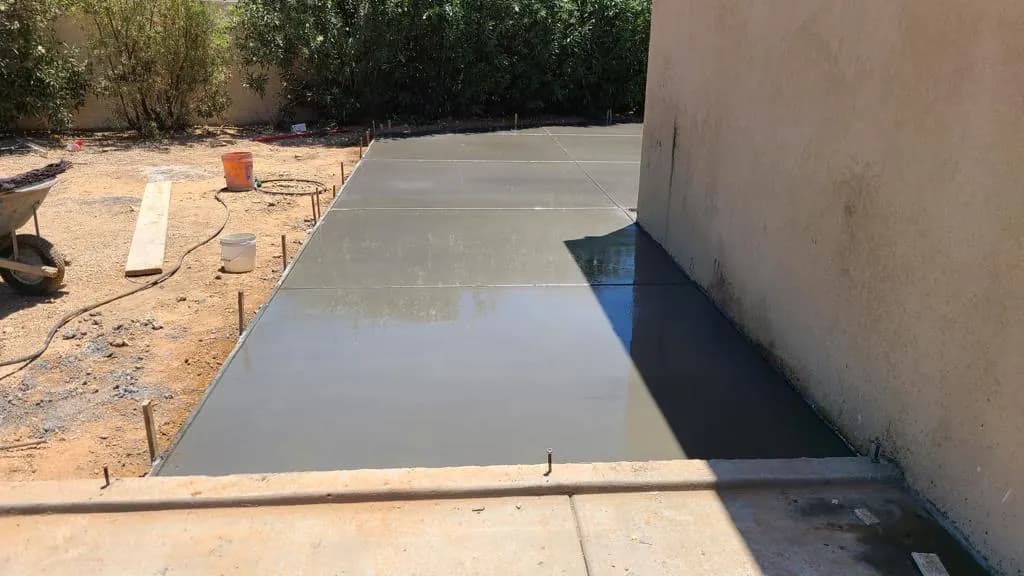
- Approach and transition slabs from the driveway to the pad
- Reinforced pads for jack and leveling points
- Heavy-duty parking for work trucks and equipment
How We Do It
Start from the vehicle
Length, width, weight and where the wheels and jacks land drive the whole specification. We would rather ask about your coach than guess.
Set out the maneuvering
We mark the pad and the approach on the ground and check the turn in from the driveway or the gate, so the space works before it is poured.
Excavate and build the base
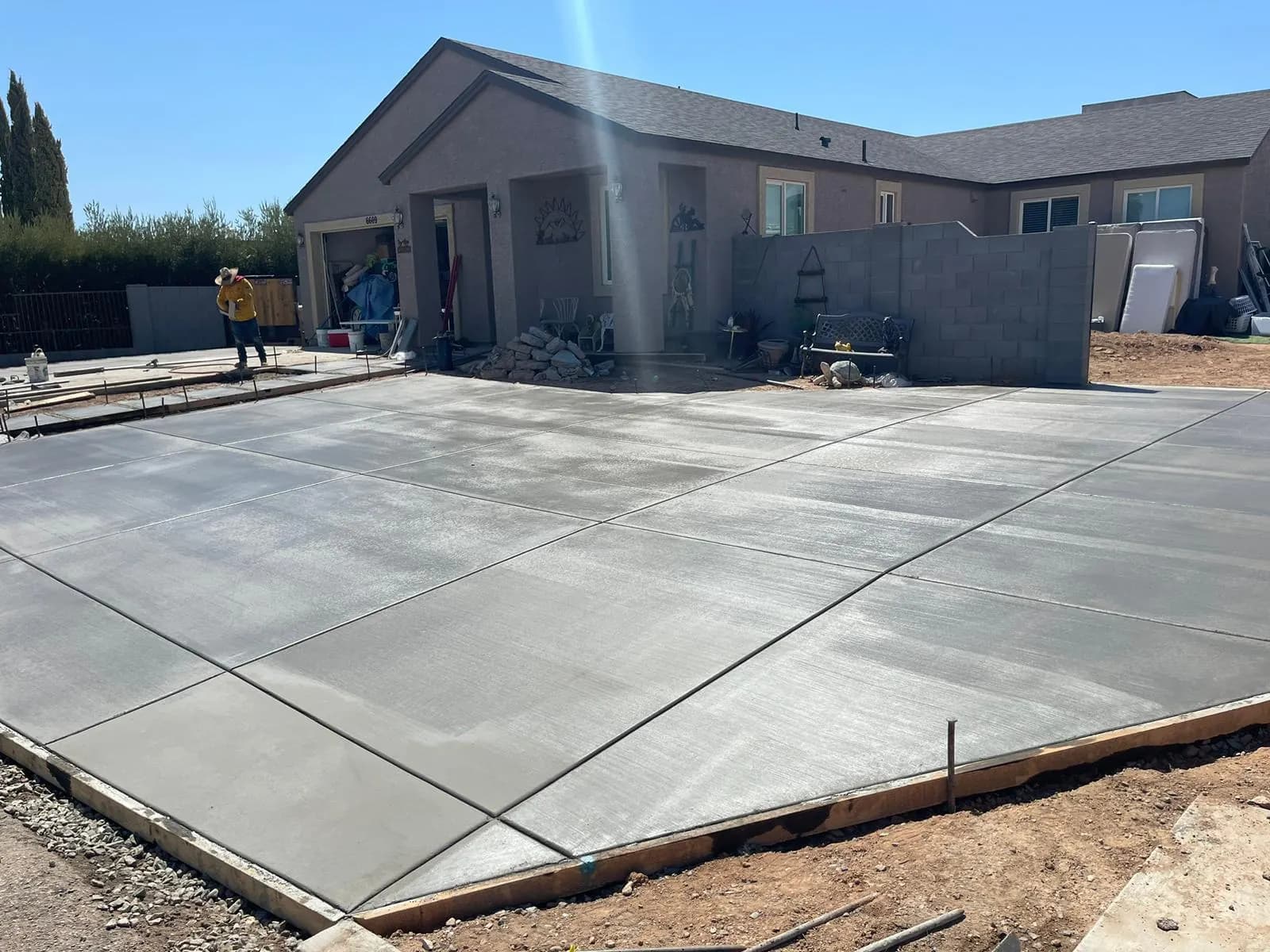
Excavation goes deeper than for standard flatwork, and the base is built up and compacted to carry the load without settling under the wheel lines.
Form and reinforce for the load
Forms are set and reinforcement placed for a heavier slab than a standard driveway, positioned correctly within the pour.
Place and finish
The pad is placed, screeded and finished with a texture that gives grip for both tires and foot traffic.
Joint for a heavy slab
Control joints are laid out with the load pattern in mind, and the pad is cured before a vehicle goes on it.
RV Pads: Common Questions
How thick does an RV pad need to be?
Thicker than a standard driveway, but the exact figure depends on the weight of your vehicle and on the ground it is going on. Tell us what will be parked there and we will specify the thickness, base depth and reinforcement in the estimate.
How big should the pad be?
Bigger than the vehicle. You need room to walk around it, and room for slide-outs and awnings if it has them. We will measure the vehicle and the available space together and lay the footprint out on the ground so you can see it before we form anything.
Can you tie an RV pad into my existing driveway?
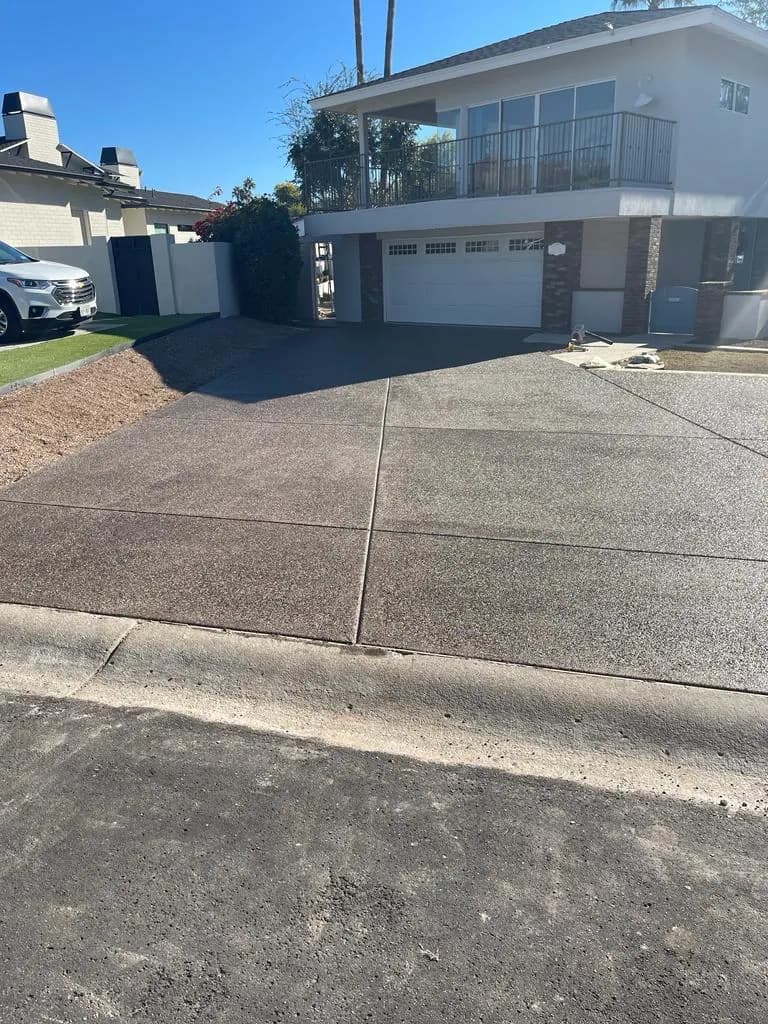
Yes, and that is how most of them are built. The transition between the two needs attention so there is no lip for a low-clearance vehicle to catch on, and the two slabs are jointed where they meet.
Do you pour the floor for an RV garage?
Yes. RV garage slabs are a regular part of this work, including slabs poured inside an existing stem wall and slabs for buildings with tall doors and heavier floor loading than a standard garage.
Where We Pour RV Pads
Serving Phoenix and surrounding communities throughout the Valley. RV Pad work is available across the metro area.
- Phoenix
- Glendale
- Peoria
- Surprise
- Buckeye
- Goodyear
- Avondale
- Scottsdale
- Mesa
- Chandler
- Gilbert
- Queen Creek
Related Concrete Services
- Garage SlabsFlat, hard-wearing floors for garages, shops and workspaces, finished to suit vehicles, equipment or a coating.
- Concrete SlabsFlat, level, properly based slabs for sheds, shops, additions, equipment and anything else that needs a solid surface under it.
- Concrete DrivewaysNew pours, replacements and widening — driveways built on a properly prepared base with jointing planned for Arizona conditions.
- Concrete FoundationsFootings, stem walls and monolithic foundation slabs poured to plan for new builds, additions and outbuildings.
Planning a Concrete Project?
Tell us what you're building and request a free estimate from SM Construction LLC.
Licensed · Bonded · Insured · Arizona ROC #358800